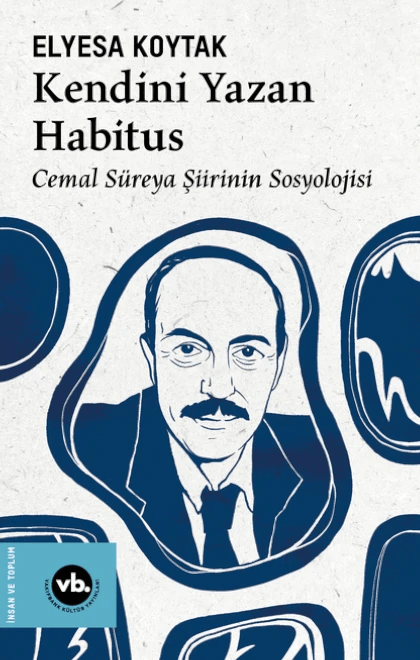
Can poetry be explained through a sociological lens? Is the emergence of a new poetic form merely the outcome of internal poetic debates and aesthetic ruptures? How can the social forces be traced within poetry’s most opaque and deeply subjective dimensions?
Focusing on Cemal Süreya, one of the most widely read poets in Türkiye, this study examines the formation of Second New (İkinci Yeni) poetry from a sociological perspective. Moving back and forth between Süreya’s poems written throughout the 1950s and his social experiences, the book situates the poet within the political and cultural climate of the period, as well as within the network of relationships he formed with other poets. In doing so, it proposes a new theoretical framework that reads the reciprocal processes through which field, habitus, and literary work shape one another.
Bringing together multiple layers of social reality, from the social profile of Mülkiye students to the rhetorical devices employed in poetry, the book demonstrates how poetry, as a form of social action, can become a mode of self-writing in tension with sociopolitical determinations. By re-engaging with the concept of habitus, widely used in contemporary sociology, the study offers an original and illuminating contribution. It is intended not only for social scientists and literary scholars, but also for all readers interested in poetry and in the work of Cemal Süreya.
Link here
 Elyesa Koytak